 Big Rock Interactive
The Riskiest Signature in American History
The Declaration of Independence, 1776
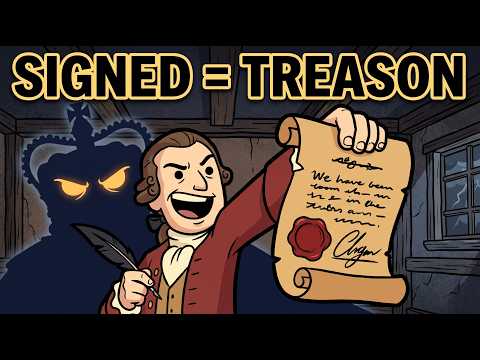
Signing your name to this paper could get you hanged. Fifty six men did it anyway. Here's what really happened with the Declaration of Independence.
In the summer of 1776, colonial leaders had to choose between backing down or committing treason on paper. This is the true story of the vote, the writing, the myths, and the date almost everyone gets wrong.
Quick facts
- The vote for independence
- July 2, 1776
- Final wording approved
- July 4, 1776
- New York's approval
- July 9, 1776. Its delegates had been waiting for instructions.
- Official parchment copy
- Most delegates signed on August 2, 1776. Some signed even later.
- Signers
- Fifty six
- Committee of Five
- Thomas Jefferson, John Adams, Benjamin Franklin, Roger Sherman and Robert Livingston
In this episode
Each line opens that moment on YouTube.
- 0:00Signing this paper could get you hanged
- 0:22Thirteen colonies, one crown
- 0:49The pamphlet that changed everything
- 1:22Meet the men writing it
- 1:58The delegate who hesitated
- 2:24Waiting on France
- 2:51Jefferson alone with the draft
- 3:13The complaint list
- 3:40What got cut
- 4:12The vote nobody agreed on
- 4:44July 4th and the printing press
- 5:19The date everyone gets wrong
- 5:50The Liberty Bell myth
- 6:17Treason, on paper
- 6:50Hancock signs big
- 7:56What's next
Myth vs. what happened
The myth
Congress declared independence on July 4.
What happened
Congress actually voted for independence on July 2. On July 4 it approved the final wording, and that is the date that stuck. New York's delegates were still waiting for instructions and did not officially approve until July 9. Independence was not one clean, unanimous moment. It trickled in.
The myth
Everyone signed the Declaration on July 4.
What happened
That night, a printer named John Dunlap ran off an estimated 100 to 200 copies, and they went out to towns, army camps and newspapers before almost anyone had signed. Most delegates did not sign the official parchment copy until August 2, and some signed even later. The words came first. The famous signatures came later.
The myth
The Liberty Bell rang out to announce independence on July 4.
What happened
Historians generally consider that a legend added decades later, not something documented at the time. The bell may have rung later, along with other bells, when the Declaration was read in public.
The myth
John Hancock signed so big that the king could read it without glasses.
What happened
That part is more myth than fact. Hancock did sign first, and biggest, and the giant signature still works because the meaning is obvious: no hiding, no whispering, name on the page.
The myth
Benjamin Franklin said, "We must all hang together, or we will all hang separately."
What happened
Historians are not even sure he said it exactly that way. The idea was true either way. Every one of the fifty six signers was now tied to the same outcome.
The myth
Thomas Jefferson invented every idea in the Declaration.
What happened
He pulled from ideas that had been building for years: natural rights, government by consent, and the idea that a king does not get unlimited power just because he was born into it. He gave those ideas a voice that Congress could send to the world.
What got cut
One of the biggest edits Congress made was cutting a section of Jefferson's draft that attacked the slave trade. A document about liberty was edited by men who were still protecting slavery. The words were powerful, and the country writing them was not living up to them. That does not make the Declaration meaningless. It makes it complicated.
Why it mattered
The Declaration did not end the war. It made the war official. It told Britain there was no clean way back, and it told the world that America wanted to be treated as its own country. The British saw treason, not a new nation, and every signature made the risk personal.
Who's who
- Thomas Jefferson
- Wrote the main draft, in secret in Philadelphia.
- John Adams
- Pushed hardest for independence. He thought July 2 would be the date Americans remembered forever.
- Benjamin Franklin
- Helped sharpen the language.
- John Hancock
- President of Congress. He put his name on the Declaration first, and biggest.
- Roger Sherman and Robert Livingston
- The other two members of the Committee of Five.
- John Dickinson
- Argued the colonies were not ready. He was not a coward, he was cautious.
- Thomas Paine
- Wrote the pamphlet Common Sense, which argued that independence was not just possible, it was necessary.
- John Dunlap
- The printer who ran off the first copies on the night of July 4.
Learn more
Good places to read more about this topic.
- National Archives: The Declaration of Independence, a history
- National Archives: A transcription of the Declaration
- Library of Congress: Declaration of Independence research guide
- National Park Service: The Liberty Bell
- Book: Pauline Maier, American Scripture: Making the Declaration of Independence (1997)